RGNL-60 Casement Window China Supplier Approval Documents
Use a controlled drawing, glass and finish record before approving an RGNL-60 casement-window order. The goal is to keep the quoted system, the approval package and the produced units aligned.
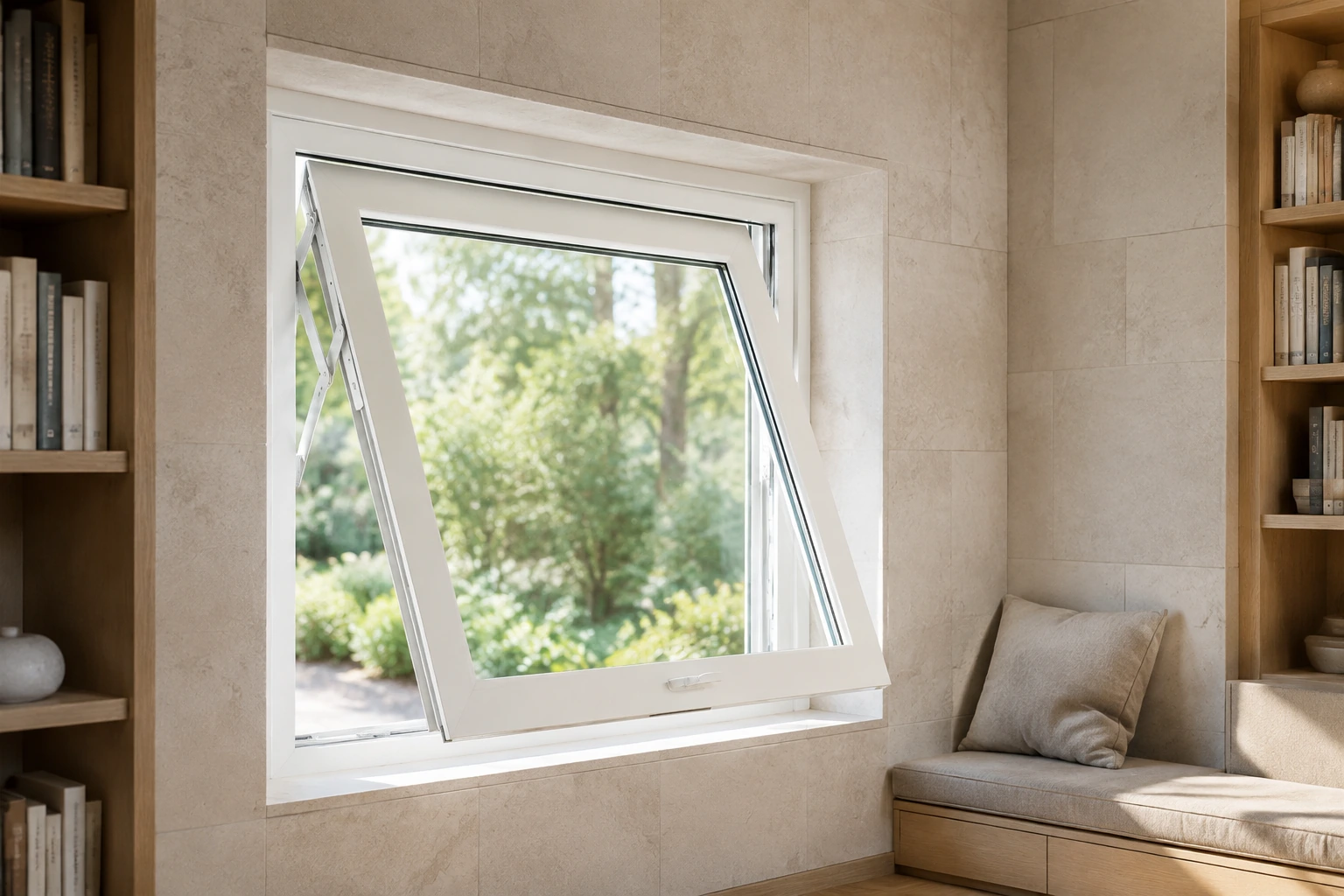
Direct Answer for Approval Packages
The public RGNL-60 Series Aluminum Casement Windows page identifies a 60 mm system entry, 6063-T5 thermal-break aluminum profile, 1.6 mm aluminum thickness and several glass, finish and opening options. A usable approval package should repeat that product identity on the window schedule rather than rely on a generic “aluminum casement window” line.
Start with the exact window mark, elevation, opening mode and glass build-up. Then ask the China supplier to return documents that identify the proposed configuration and its exceptions. Buyers can also review the related Casement Windows category before assembling the RFQ.
Verified RGNL-60 Quick Specs
| Item | Verified product-page basis | Approval action |
|---|---|---|
| Product identity | RGNL-60 Series Aluminum Casement Windows | Use the series name and a unique window mark on each drawing. |
| Published width | 60 mm | Ask for the proposed head, jamb and sill sections. |
| Profile | 6063-T5 thermal-break aluminum profile | State the proposed member and where the listed thickness applies. |
| Aluminum thickness | 1.6 mm | Confirm it against the returned section drawing. |
| Glass families | Tempered; double or triple tempered; laminated, Low-E, reflective or tinted glass | Write the complete pane, cavity and safety treatment for each mark. |
| Published double glazing | 5 mm + 15Ar + 5 mm | Treat it as a listed option, not a universal project selection. |
| Opening modes | Inward, tilt-and-turn, outward and awning opening | Show the selected mode, viewing direction and handle side. |
| Finish routes | Powder coating, anodized, wooden grain or PVDF coating | Approve an exact finish and physical sample before production. |
Document Set to Request Before Approval
Window Schedule and Elevations
Number every unit, list width, height, quantity, fixed and operable areas, interior/exterior viewing direction, opening mode and required clearances.
Section and Interface Drawings
Request head, jamb, sill and mullion details for the quoted configuration. Coordinate frame position, wall build-up, flashing, drainage and interior finish without assuming a standard detail.
Glass and Finish Register
Give each glass build-up and finish a controlled code. Link the code to window marks, safety treatment, sample requirement and visible-side direction.
Hardware and Exceptions List
Ask for the proposed handle, hinges, restrictors, screens and accessories by window mark. Require a written list of items that are excluded or still subject to confirmation.
Choose the Opening Mode on the Drawing
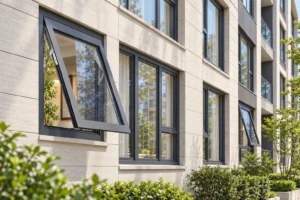
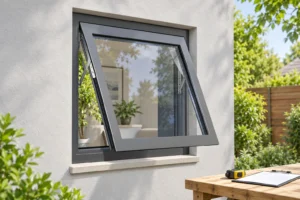
The listed opening options are not interchangeable. Inward opening needs interior swing space; outward opening needs façade clearance; an awning sash needs a top-hinged projection zone; and tilt-and-turn requires its own operating sequence and clearance. Identify one selected configuration for each opening instead of approving a broad mode list.
For a white frame, the product page lists powder coating but does not publish one color code or gloss level. State the required white reference and approve a physical sample. The same discipline applies to glass: a listed 5 mm + 15Ar + 5 mm build-up does not confirm coating, spacer, safety treatment or suitability for every unit.
What Changes the Quotation Scope
Comparable prices require the same approved configuration and supply boundary. The supplier should price the schedule, not an undefined square-metre assumption.
- Window sizes, quantities and repeated marks
- Selected opening mode and hardware scope
- Glass build-up and safety treatment
- Frame finish, color and sample approval
- Screens, restrictors, trims and accessories
- Section drawings and submittal revisions
- Packing basis and package marking
- Destination, delivery terms and supplied documents
What to Send for a Controlled RFQ
Send a dimensioned schedule, elevations, wall sections, project location, quantities, required standards, glass schedule, white finish reference, accessory list and destination. Ask the returned quotation to name the RGNL-60 series, identify inclusions and exclusions, and state which drawings or documents remain subject to approval.
- Project name and contact for technical queries
- Window schedule with unique marks
- Dimensions, elevations and wall sections
- Opening direction and operation requirements
- Glass, safety and visible-side requirements
- Finish sample and gloss reference
- Hardware, screen and restrictor requirements
- Required submittals, reports or calculations
FAQ
What does the official RGNL-60 page verify?
It identifies the RGNL-60 Series Aluminum Casement Windows product, 60 mm width entry, 6063-T5 thermal-break aluminum profile, 1.6 mm thickness, listed glass families, finish routes and four opening options.
Can one approval drawing cover every opening mode?
No. Identify the selected inward, tilt-and-turn, outward or awning operation for each window mark. The drawing needs to show the relevant clearances and handing.
Is the listed 5 mm + 15Ar + 5 mm glazing automatic?
No. It is a published double-glazing option. Confirm the full glass build-up, treatment and project suitability for the actual order.
Which performance documents should be requested?
State the required standard and criteria, then request evidence that identifies the proposed product configuration, dimensions, glass, hardware and tested scope. Do not rely on unsupported general claims.
Why approve a finish sample?
The page lists several finish processes but does not define one universal white color or gloss. A physical sample makes the intended visible finish reviewable before production.
Request RGNL-60 Approval Documents
Send Rogenilan the window schedule, drawings, glass requirement, finish reference, hardware needs, document requirements, quantity and destination. The team can review the defined RGNL-60 configuration before issuing a project quotation.