120 Thermal Break Sliding Door China Manufacturer: Import Specification
A project buyer comparing a thermal break sliding door China manufacturer needs more than a product name and an opening size. Track count, frame depth, glass build-up, hardware, threshold coordination, packaging data, and approval documents all affect whether a quotation matches the intended opening.
Rogenilan lists the RGNL-120 as a thermal break sliding door with two-track and three-track configurations. This article converts the verified product data into an import specification checklist for developers, architects, contractors, and distributors.
Review the Sliding Doors product category and the specific RGNL-120 Series Thermal Break Sliding Door before submitting a schedule for quotation.
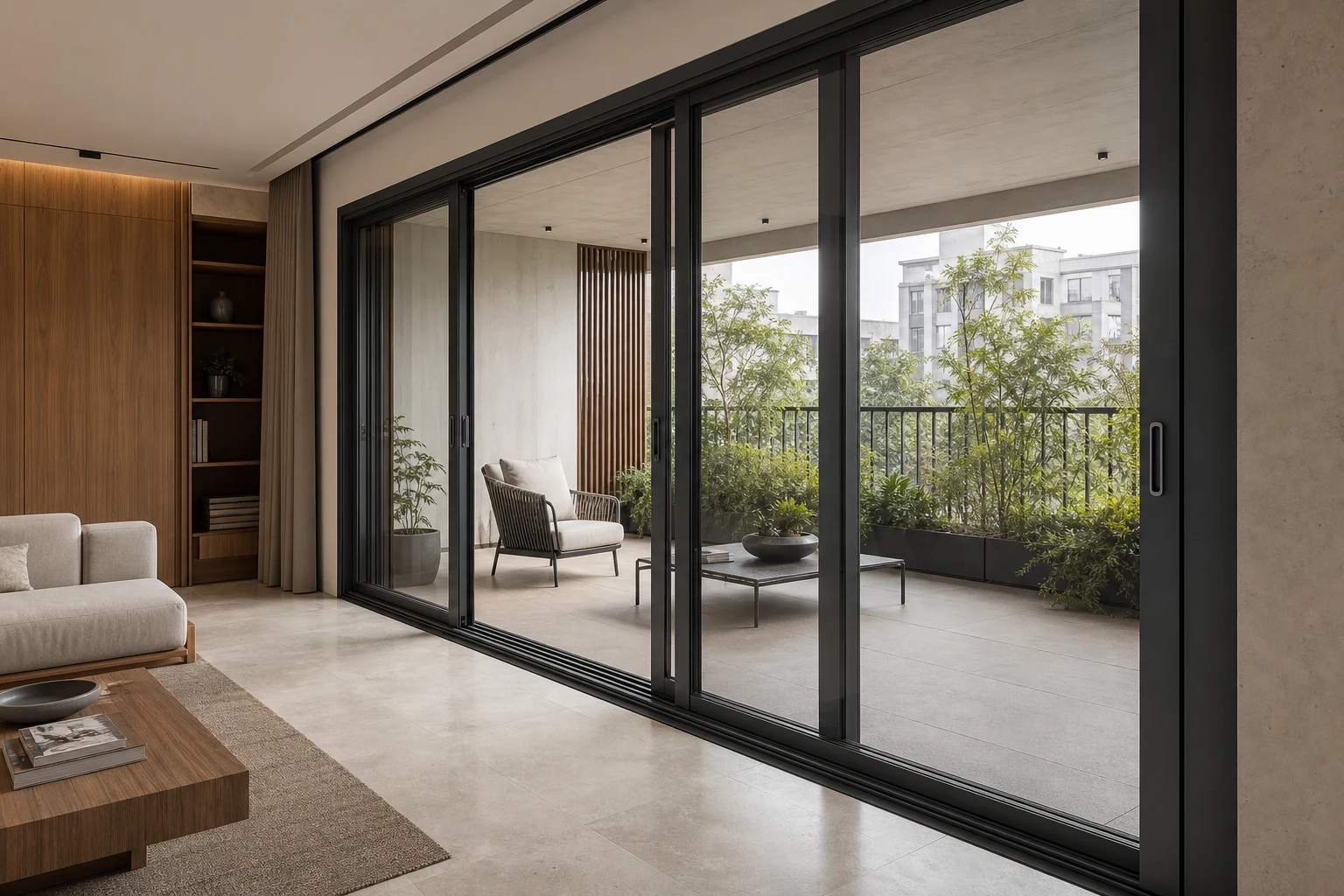
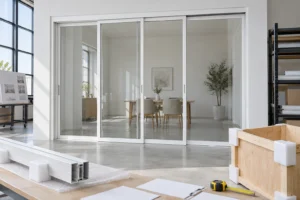
Illustrative application scene, not a completed customer project. Final panel proportions, track arrangement, glass, hardware, finish, and installation interfaces depend on the approved project specification.
Verified RGNL-120 Sliding Door Specifications
The following data comes from Rogenilan's official product page and corresponds to the 120 thermal break heavy-duty sliding door listed in the 2024 catalog. Available configurations must be confirmed for each order.
| Item | Published product specification |
|---|---|
| Product type | 120 Series thermal break sliding door |
| Two-track frame width | 120 mm |
| Three-track frame width | 183 mm |
| Sash width | 74 mm |
| Aluminum profile | 6063-T5 |
| Published profile thickness | 1.8 mm |
| Track selection | High track |
| Double insulating glass | 5 mm + 15A + 5 mm, tempered |
| Laminated insulating glass | 5 mm + 1.14 PVB + 5 mm + 12A + 5 mm |
| Triple glazing | 5 mm + 6A + 5 mm + 6A + 5 mm |
| Glass slot | 30 mm |
| Listed hardware | 256 mm New Zealand handle, safety lock cylinder, double-groove lock body |
| Published finish processes | Fluorocarbon process and powder coating, with listed color examples |
Do not treat this table as a fabrication release. The final door size, panel arrangement, glass, finish, drainage detail, hardware functions, and applicable performance requirements should appear on approved shop drawings and schedules.
Two-Track or Three-Track: Define the Layout First
The published frame width changes from 120 mm for two tracks to 183 mm for three tracks. That difference affects the wall return, sill detail, drainage interface, interior and exterior finishes, and the space required at the opening.
An enquiry should therefore include an elevation for every door type. Mark the number of panels, which panels move, the stacking direction, the required clear opening, and the operating side. A three-track request should not be described only as a “large sliding door”; the track arrangement must be visible in the drawing.
The product page lists a high track. The architect or contractor should coordinate that threshold with finished floor levels, waterproofing, exterior paving, drainage, and any accessibility requirement. These details must be resolved before production because a threshold change can alter the frame and site interface.
Specify the Glass by Build-Up
The official product page lists three glass options: double tempered insulating glass, a laminated insulating configuration, and triple glazing. A buyer should copy the complete build-up into the door schedule rather than request only “double glass” or “triple glass.”
Project requirements may also call for a coating, gas fill, safety treatment, edge treatment, or a particular spacer. Those items are not confirmed by the published RGNL-120 specification and must be stated separately for factory review. Glass selection should be checked against local safety, energy, structural, and acoustic requirements.
Before approval, request a glass schedule that identifies every pane, cavity, interlayer, and optional coating. The supplier should confirm that the proposed build-up is compatible with the 30 mm glass slot and the selected panel size.
Hardware and Finish Checks for an Import Quote
The listed hardware includes a 256 mm handle, safety lock cylinder, and double-groove lock body. The quotation should still identify the locking direction, cylinder function, handle finish, keying requirement, and any restrictor or security requirement. Hardware shown in a photo is not a substitute for a written hardware schedule.
For finish approval, state the required process and color reference. The product page publishes fluorocarbon and powder-coating processes with several named color examples, but the final order should use an approved sample or agreed reference. Exposure conditions and any project-specific finish standard should be communicated at enquiry stage.
Documents to Approve Before Production
A useful pre-production package should include:
- Door schedule with opening and unit dimensions
- Elevations showing panel count, moving panels, and opening direction
- Two-track or three-track selection
- Threshold, floor-level, waterproofing, and drainage details
- Complete glass and hardware schedules
- Finish process, color reference, and approved sample
- Project performance criteria and applicable test standards
- Shop drawings showing anchors and perimeter interfaces
- Packaging marks and unit identification method
“Thermal break” describes the system type; it is not a project-specific performance result. If thermal, air, water, wind-load, or acoustic evidence is required, request documents that apply to the proposed size and configuration. Do not rely on a certification logo or data from another series.
Import and Packaging Information to Request
Before comparing landed cost, ask the manufacturer to state the Incoterm, departure point, included scope, package count, packed dimensions, gross weight, and proposed loading method. Confirm whether glass, hardware, installation accessories, spare parts, and technical documents are included.
The buyer should also provide the destination, required commercial documents, shipment marks, unloading constraints, and planned installation sequence. Ask for a packing list that links each crate or unit to the door schedule. This helps the site team route products to the correct opening without relying only on visual identification.
Packaging construction, container quantity, lead time, and freight are not stated in the verified product data used here. They must be confirmed in the project quotation and shipping plan rather than assumed.
Information to Send for a Factory Quotation
Send the project location, door schedule, architectural drawings, structural opening sizes, quantities, track arrangement, glass specification, finish, hardware requirements, performance criteria, destination, and requested delivery timing.
For replacement or renovation work, also provide measured opening conditions and photographs of the substrate and sill. For new construction, coordinate the shop drawings with the wall, waterproofing, and floor details before releasing dimensions.
Frequently Asked Questions
What is the frame width of the RGNL-120 sliding door?
The official product page lists 120 mm for the two-track frame and 183 mm for the three-track frame.
Is laminated or triple glazing available?
The published options include a laminated insulating build-up and a triple-glazed build-up. The factory must confirm the selected glass for the proposed panel size and order specification.
Does the product page establish project performance ratings?
No. The verified data used in this article describes the system configuration. Project-specific thermal, air, water, structural, or acoustic requirements require applicable supporting documents or calculations.
What should be checked before importing?
Approve the drawings, glass, hardware, finish, threshold interfaces, packaging identification, shipping scope, and required import documents before production and dispatch.
Request a Project-Specific Review
Send Rogenilan the opening schedule, drawings, quantities, track layout, glass, hardware, finish, destination, performance criteria, and required delivery date. The factory can then review the RGNL-120 configuration and prepare a quotation against a defined scope.