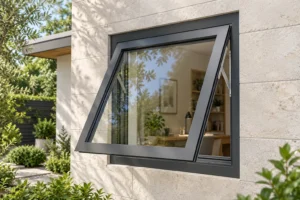
Top 10 Casement Window Manufacturers in China for OEM Projects
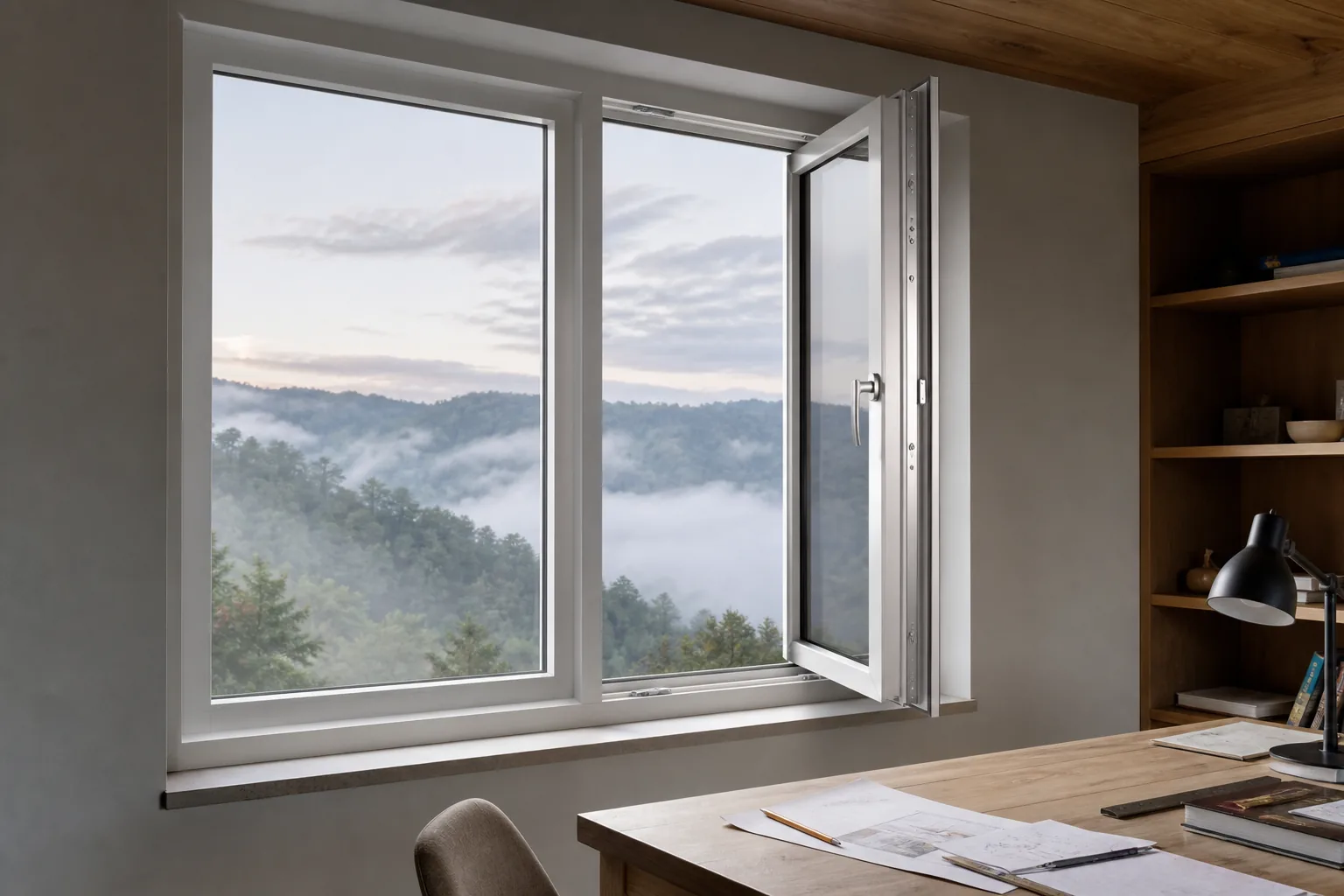
A China sourcing map is useful only when geography becomes an audit and sample plan. This editorial shortlist identifies ten companies whose official pages show both a province-level location and relevant casement-window or window-system evidence, then sets out what an OEM buyer should verify before approving drawings, materials or production.
How to Read This Province Sourcing Map
Public information was reviewed on 13 August 2026. Inclusion required an identifiable company, a province or province-level municipality, and an official page showing casement windows or directly relevant window-system manufacturing. Website evidence is a research starting point: it does not prove that a company can deliver every size, test scope, private label, package design or engineering change an OEM project may require.
The sequence follows a practical multi-region research route rather than a quality ranking. Province can help organize travel, sample consolidation and factory-audit timing, but it does not determine quality. Likewise, a province does not establish the shipping port, Incoterm or inland-freight route; those must be quoted for the exact factory and shipment.
This guide is published by Rogenilan, which is also included in the shortlist. All ten companies were reviewed under the same public location and product-relevance standard. Rogenilan is the only Guangdong company selected in this particular editorial shortlist. That is a list-design rule, not a claim about how many window companies operate in Guangdong. “Top” means an editorial shortlist for buyer research, not a sales, capacity, market-share or independent quality ranking.
Start with System Definition, Not a Generic OEM Label
Use the first two enquiries to lock the baseline: outward or inward opening, frame and sash sections, thermal-break status, glass build-up, hardware function, screens, finish, target reports and packaging. “Custom” or “OEM” on a website should prompt questions, not assumptions about tooling, private labeling or design ownership.
1. LEAWOD Windows & Doors Group Co., Ltd.
Guanghan, Sichuan
Relevant product evidence: LEAWOD’s official aluminum casement-window page shows casement-window products, while its contact page identifies a Guanghan, Deyang, Sichuan address. Public options include aluminum and wood-aluminum products, so buyers must keep material scope explicit.
OEM project question: which legal entity will contract and invoice, which Sichuan facility will make the sample and order, and is the proposed system aluminum, wood-aluminum or another construction? Request the precise system name, sections, bill of materials, finish samples and report applicability before treating a product-page reference as an approved OEM configuration.
2. Rogenilan Windows and Doors
Foshan, Guangdong
Relevant product evidence: Rogenilan’s official casement-window category lists multiple aluminum systems. The RGNL-110 casement-window page, for example, publishes a 110 mm system, thermal-break aluminum profile, glazing options, hardware, finishes and outward/awning opening modes. Its site address identifies Foshan, Guangdong.
OEM project question: ask Rogenilan to mark the proposed frame, sash, mullion, drainage, glass, hardware and screen on one controlled drawing. Obtain project-specific confirmation of reports, size limits and substitutions; do not extend one published series specification to another. Because Rogenilan publishes this article, buyers should independently check its legal entity, factory, samples and contract just as they would for every other candidate.
Separate Finished Windows from Profiles and Licensed Systems
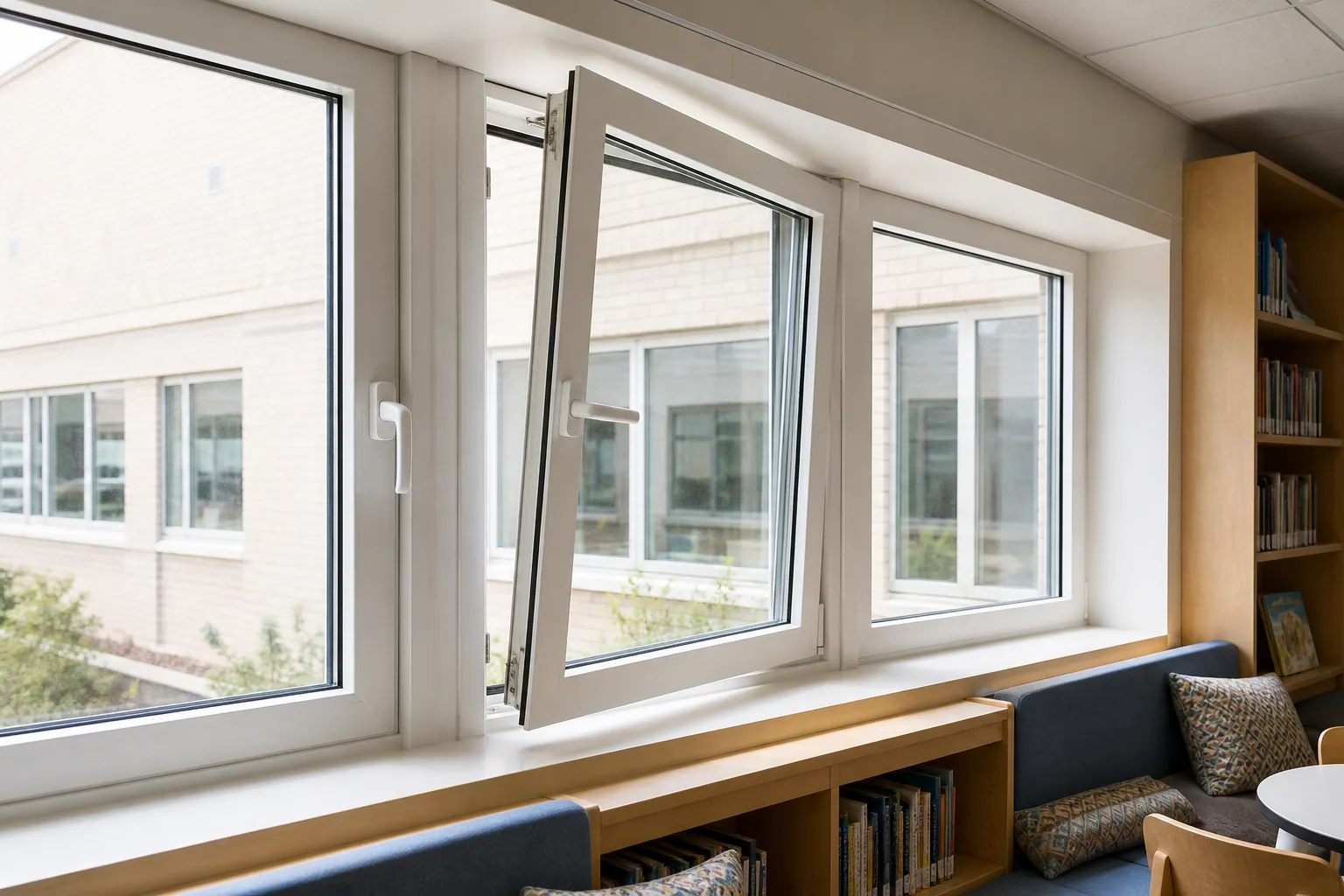
Shanghai, Zhejiang and Fujian candidates show different public signals: architectural system fabrication, finished-window ranges, profile production and project customization. A buyer should decide whether the order is for fabricated windows, profiles, engineering services or a combination. Where a third-party system brand is named, obtain current authorization and define who owns the shop drawings and warranties.
3. Shanghai Ruishi Window & Door Co., Ltd.
Shanghai Municipality
Ruishi’s official site places its window and door operation in Tinglin Town, Jinshan District, Shanghai and describes customized fabrication of architectural aluminum windows, doors and facade systems. Its product collection displays Schüco AWS window systems rather than a generic private-label casement catalogue.
Audit prompt: Is the proposed casement configuration an authorized third-party system, a customer-specified system or an original Ruishi design? Ask for authorization evidence where applicable, system drawings, approved sourcing channels, engineering responsibility and the contractual limits on private labeling or modifying protected components.
4. Shanghai YY Windows Co., Ltd.
Shanghai Municipality
YY’s official aluminum casement-window page lists thermal-break, hand-crank, commercial and non-thermal-break casement options. The same site identifies the company and a Pudong, Shanghai address.
- Do not infer: that every public option shares one test scope or is available with private labels.
- Request: the exact product family and the test or listing schedule matching the quoted frame, glass, hardware, size and production location.
- Control: whether OEM work covers only labeling and packaging or also profiles, drainage, hardware, glazing and calculations. Require written approval for every substitution.
5. Ningbo Jinhua Aluminum Co., Ltd.
Cixi, Zhejiang
Relevant product evidence: Jinhua’s official company site identifies Cixi, Zhejiang and presents aluminum profiles plus a window-and-door system range with two energy-saving casement-window products. Its contact page supplies the Cixi industrial-zone address.
OEM project question: determine whether the quotation covers aluminum profiles, a complete fabricated casement window or both. For finished windows, require assembly drawings, corner-joint method, drainage, gaskets, glass, hardware and final QC. If a new extrusion die is proposed, define die drawings, ownership, storage, maintenance, sample approval and use restrictions in the contract.
6. Liang Mei Long Tech (Hangzhou) Co., Ltd.
Hangzhou, Zhejiang
Relevant product evidence: Liang Mei Long’s official site gives a Hangzhou, Zhejiang address and lists aluminum casement windows as well as UPVC casement windows. The site also publicly mentions OEM/ODM customization, which signals a topic for verification rather than proof of any specific capability.
OEM project question: ask the company to distinguish the aluminum and UPVC production scope, identify the factory and contracting entity, and map the requested change to drawings, tooling, materials, testing and sample gates. Do not accept a general certification list; request the current certificate or report, holder, model and scope applicable to the offered casement window.
7. Xiamen Haoyue Door & Window Co., Ltd.
Zhangzhou, Fujian
Haoyue’s official company and product page presents the K50 Series outward-opening casement window and describes aluminum and UPVC window production. Its contact page locates the operation in Longhai District, Zhangzhou, Fujian, despite the Xiamen name.
Put this on the visit agenda: match the legal entity and manufacturing site to the offered series and physical sample; open the section drawings beside the sample; and record glass, gasket, hardware, finish, screen and maximum-size limits. If a public performance class is relevant, ask for the underlying standard and report scope. Confirm who signs revisions and how in-process material is isolated when a change arrives.
Use the Northern Leg for System and Factory Comparisons
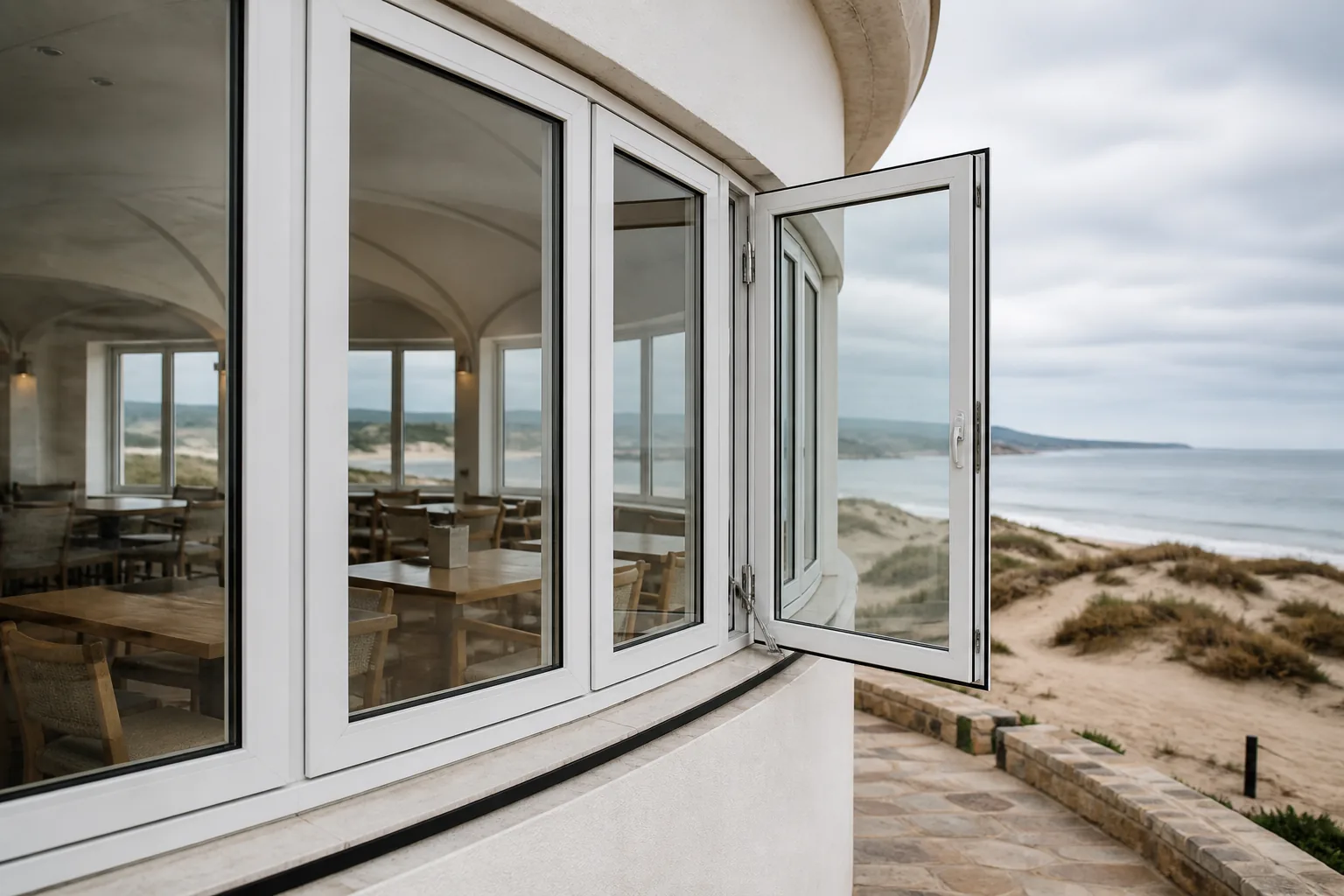
The last three companies publish casement-window or system-window evidence from Shandong and Liaoning. Rather than attempting three audits in one rushed day, reserve time to reconcile the sample, controlled drawing and bill of materials at each site. Similar product names do not establish equivalent seals, hardware, drainage or test coverage.
8. Weifang Xinling Door Industry Group Co., Ltd.
Weifang, Shandong
Relevant product evidence: Xinling’s official casement-window range shows multiple inward-opening system-window series. Its company page locates the business in Linqu County, Weifang, Shandong, and distinguishes a Qingdao office from the Weifang factory.
OEM project question: state whether the enquiry is for inward-opening casement, tilt-turn or another mode, and obtain a hardware schedule that removes ambiguity. Verify the factory that will fabricate the order, the invoice entity, sample traceability, glass source, gasket and hardware codes, inspection stages and packaging method.
9. EOSS System Doors & Windows (Shandong) Co., Ltd.
Linqu, Shandong
Relevant product evidence: EOSS’s official company page identifies the Shandong entity, its window-system work and a casement-window series. Its high-insulation window page specifically lists an ES76 casement window, while the site address places EOSS in Linqu County, Weifang, Shandong.
OEM project question: determine whether the buyer is purchasing a complete window, a system package or technical support for another fabricator. Ask which published parameters apply to the selected series, whether the proposed specimen matches any cited report, who performs fabrication and glazing, and how the supplier controls profile, insulation-strip and hardware revisions.
10. Liaoning Etaifeng Windoor Co., Ltd.
Shenyang, Liaoning
Relevant product evidence: Etaifeng’s official site gives a Shenyang, Liaoning address and lists internal casement, external-opening insulated, passive and electric aluminum windows. The public range indicates several operating and system categories without establishing that every one is offered for private-label OEM work.
OEM project question: define the required opening mode and automation scope before asking for a drawing. For electric or special configurations, confirm control hardware, power, safety logic, manual override, replacement parts and destination requirements. For all configurations, obtain the report scope, glass, hardware, finish, packaging and installation interface tied to the quotation.
Province Map: Evidence and the Next Import Question
This table records only public signals used for the shortlist. It deliberately separates those signals from what a buyer must establish through an RFQ, audit, sample and contract.
| Province | Company | Relevant Product Evidence | Import Question |
|---|---|---|---|
| Sichuan | LEAWOD | Aluminum casement and wood-aluminum window pages | Which construction, entity and facility will supply? |
| Guangdong | Rogenilan | Official casement category; RGNL-110 product page | Which series, drawing and report cover the order? |
| Shanghai | Ruishi | Architectural aluminum window fabrication; AWS systems | What system authorization and modification rights apply? |
| Shanghai | YY Windows | Thermal-break and commercial casement ranges | Does the report schedule match the quoted assembly? |
| Zhejiang | Ningbo Jinhua | Profiles plus energy-saving casement systems | Profiles, finished windows or both—and who owns dies? |
| Zhejiang | Liang Mei Long | Aluminum and UPVC casement categories | Which material, factory and certificate scope apply? |
| Fujian | Xiamen Haoyue | K50 outward-opening casement window | Which standards support the offered performance class? |
| Shandong | Weifang Xinling | Multiple inward-opening system-window series | Is the quote casement, tilt-turn or another mode? |
| Shandong | EOSS | Casement series and ES76 casement window | Complete window, system package or technical support? |
| Liaoning | Etaifeng | Internal, external, passive and electric window ranges | What operating mode and control scope are included? |
Pre-Audit Calls Before You Commit to the Province Route
Prove the address and production role
Ask each candidate to send its current business license, English company name used for export, factory address and the name of the entity that will sign the contract. During a live video call, request a continuous walk from the entrance sign to profile storage, cutting, machining, corner assembly, glazing, final inspection and packing. A polished showroom or sales office does not establish where the order will be fabricated. If multiple factories or subcontractors may be used, require the proposed allocation in writing before arranging travel.
Reconcile one sample with one controlled drawing
Assign a sample ID and put it on the frame label, drawing and inspection record. During the call, ask the supplier to point out the profile codes, thermal-break component where applicable, glass spacer, hardware marks, gaskets, drainage, corner keys, fasteners and finish reference. Photograph or record the details only with permission. List every variance between the sample, quotation and drawing, then close those variances before calling the sample approved. This turns a visit into a verification exercise instead of a product presentation.
Plan freight questions without making port assumptions
Request separate logistics figures for the sample and production order. The RFQ should state factory pickup point, packing dimensions and weight, preferred Incoterm with named place, cargo readiness basis, container or consolidation assumption, loading responsibility and required transport documents. Ask who designs the rack or crate, who secures glass and loose hardware, and how returns or spare parts would travel. Only after receiving these facts should a buyer compare inland routes and port options with a freight provider.
A Six-Province Audit and Sample Plan Buyers Can Use
Do not book travel from this article alone. First request business licenses, exact factory addresses and video calls, then build a route using current transport schedules. The following tool creates decision gates and prevents geography from replacing technical comparison.
Fields to place on the audit sheet
- Legal entity and factory address
- Drawing number and revision
- Profile and thermal-break codes
- Glass build-up and source
- Hardware and fastener codes
- Gasket and sealant specification
- Corner and mullion assembly
- Drainage and pressure equalization
- Finish reference and sample
- Applicable report or calculation
- Inspection sampling rule
- Labeling and packing standard
- Approved substitutions
- Incoterm and named place
What a Casement Window OEM Brief Must Control
A usable OEM brief begins with the opening schedule and elevations, not a request for the lowest square-metre price. Identify inward or outward opening from the correct viewing side; frame, sash and coupler sections; structural and exposure criteria; exact glass make-up; hardware functions; screens; finish; installation interface; quantities and destination.
Then separate four kinds of customization: brand and packaging changes, configuration changes using an existing system, new profile tooling, and original engineering. For each, assign responsibility for drawings, calculations, testing, tooling ownership, samples, change approval and later replacement parts. Ask suppliers to price the same bill of materials, Incoterm and named place, with exclusions visible. A lower quote built on different glass, hardware, packing or documentation is not a comparable quote.
Before production, freeze a signed drawing revision and golden sample. The purchase order should say that no profile, glass, spacer, hardware, gasket, finish, sealant or package substitution is allowed without written approval. Confirm drawing-release dates, inspection access, remedy for nonconforming goods, document delivery and a known-channel procedure for validating beneficiary-account changes.
Sample-to-Production Handoff Checklist
After choosing a candidate, create a single approval register rather than leaving decisions scattered across email and chat. Give every item an owner, due date, revision and status. At minimum, include opening schedule, elevations, cross-sections, glass schedule, hardware schedule, finish chip, screen sample, installation detail, applicable calculation or report, product label, carton or crate drawing and inspection plan.
Require the supplier to issue a change notice when any approved material becomes unavailable. The notice should identify the affected line item, reason, proposed replacement, technical difference, price or schedule effect and evidence needed for approval. No response should mean “not approved,” not implied consent. Before mass production, hold a release meeting that references the final drawing revision and sample ID. Before shipment, use the same register to check production samples and close outstanding documents.
For replacement orders, keep a controlled copy of the bill of materials, profile and hardware codes, finish reference and approved drawings. Confirm how long dies, jigs and digital files will be retained, who may use them, and what happens if the contracting entity or factory changes. These records are often more useful to an importer than a broad promise of OEM service.
FAQ for Multi-Province Casement Window Sourcing
Does a manufacturing province indicate casement-window quality?
No. Location can organize research and travel, but quality depends on the approved design, materials, process controls, inspection, evidence and contract. Evaluate each factory and offered system on the same project specification.
How should an importer arrange audits across several provinces?
Qualify candidates remotely first and confirm the actual factory address, sample and decision-maker. Cluster only the factories that pass that gate, allow enough time to trace production rather than tour a showroom, and build the route from current transport information.
Can a buyer select a shipping port from the province name?
No. The production address, cargo consolidation, carrier, route, equipment, Incoterm and supplier’s logistics arrangement affect the shipment. Request a quotation with a precise named place and confirm inland transport separately.
What is the minimum useful casement-window sample?
A corner sample can confirm profile, finish, gasket and assembly, but it cannot demonstrate complete drainage, operation or project performance. A representative full window is more useful before volume production; neither replaces applicable testing or calculations.
How do OEM and ODM scope differ in a casement-window RFQ?
OEM may mean making an approved configuration under buyer branding, while ODM may involve supplier-led design. Marketing usage varies, so define the actual tasks: labeling, packaging, system selection, drawings, new tooling, engineering, testing, ownership and change control.
Turn the Sourcing Map into a Controlled Casement Window RFQ
Send Rogenilan your opening schedule, drawings, opening direction, system and glass requirements, hardware functions, finish, performance evidence, quantity, destination and required OEM scope. The next useful step is a documented configuration review—not a generic price request.