RGNL-60 Casement Window China Supplier Hardware Selection
For this RGNL-60 casement-window system, select the hardware around the approved sash size, glass mass and opening mode—not around an undefined generic hardware allowance. Put the proposed set on the returned drawing before production approval.
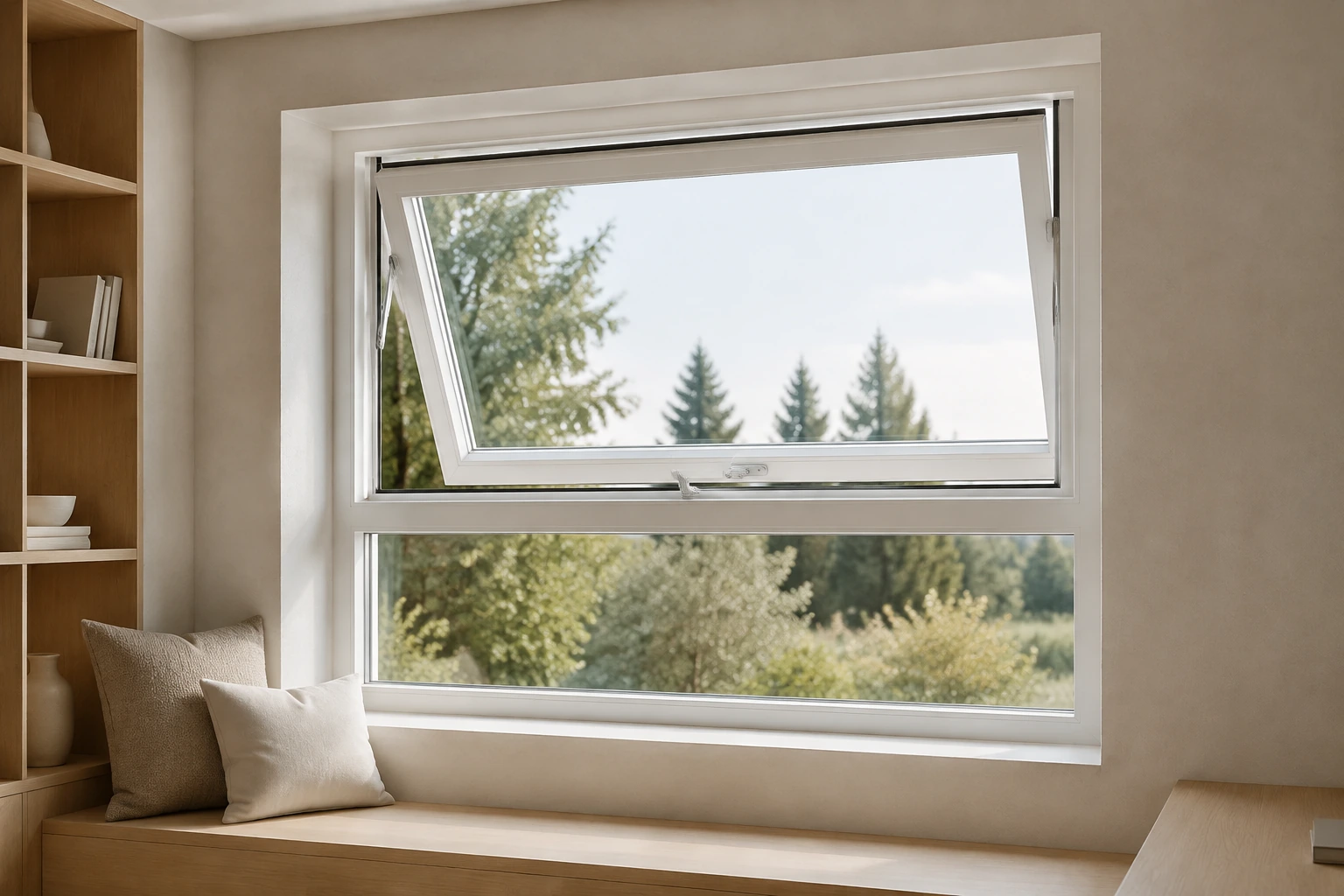
Direct Answer for RGNL-60 Hardware Selection
The official RGNL-60 Series Aluminum Casement Windows page identifies a 60 mm thermal-break system with a 6063-T5 aluminum profile, 1.6 mm aluminum thickness, a listed German hardware line and inward, tilt-and-turn, outward or awning opening options. The page identifies a hardware basis, but it does not publish a project-specific handle, hinge, restrictor, screen or accessory schedule.
That makes the procurement control simple: state the selected opening mode and sash dimensions, then ask the China supplier to return the proposed hardware set by window mark. Review the related Casement Windows category before issuing the RFQ.
Verified RGNL-60 Quick Specs
| Item | Verified basis | Hardware-selection action |
|---|---|---|
| Product | RGNL-60 Series Aluminum Casement Windows | Keep the exact series name on each returned drawing. |
| System width | 60 mm | Request head, jamb and sill sections for the selected window mark. |
| Profile | 6063-T5 thermal-break aluminum | Confirm the proposed sash and frame members. |
| Aluminum thickness | 1.6 mm | Check the supplier’s drawing against the product-page basis. |
| Hardware | A German hardware line is listed on the public product page. | Ask for the exact set, finish, handedness and any exclusions in writing. |
| Opening modes | Inward, tilt-and-turn, outward and awning | Approve one mode and clearances for every operable mark. |
| Glass families | Tempered, double/triple tempered, laminated, Low-E, reflective and tinted glass are listed. | State the approved glass build-up because glass mass affects selection. |
| Listed double glazing | 5 mm + 15Ar + 5 mm | Treat it as a listed option, not a default for every project. |
Match the Set to the Opening Configuration
Inward Opening
Define the hinge side, handle location, inward swing clearance and any child-safety or restrictor requirement. Do not assume that an outward-opening schedule can use the same arrangement.
Tilt-and-Turn
Ask for the operating sequence, handle positions, selected hardware set and clearance at the sill and reveals. Put the chosen function on the elevation.
Outward Opening
Record façade clearance, wind exposure, opening angle and the intended hold-open or limiting requirement. Confirm which side of the building the sash projects to.
Awning Opening
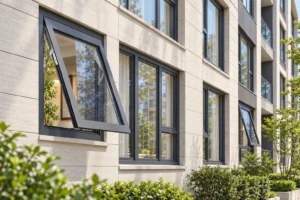
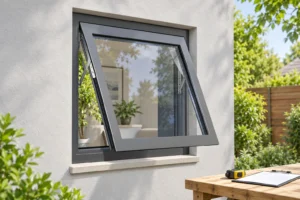
Identify the top-hinged sash, opening projection, handle access and any screen coordination. Request the proposed stays, hinges and operating hardware with the section detail.
Five Checks Before Approving Hardware
- Freeze the glass. Confirm panes, cavity, coatings and safety treatment; a change in glass changes sash mass.
- Freeze the sash geometry. Return width, height, opening direction, fixed/operable division and viewing direction by mark.
- Read the returned schedule. It should identify handles, hinges or stays, locking parts, restrictors, screens and accessories—not merely say “standard hardware.”
- Coordinate interfaces. Check handles against blinds, furniture and wall finishes; check opening projection against façade elements and circulation.
- Record substitutions. Require a written deviation list before any change to the approved set.
These are selection controls, not claims that every item is included with the RGNL-60 system. The supplier should confirm the actual proposal against the project drawings.
What Changes the Hardware Scope and Quote
Comparable quotations need the same operating configuration. A headline square-metre price does not reveal whether the proposed hardware supports the same sash, glass and functional scope.
- Sash width, height and glass mass
- Opening mode and viewing direction
- Handle style, finish and handedness
- Hinges, stays or friction support
- Locking points and restrictors
- Screens and accessory coordination
- Window quantity and repeated marks
- Finish sample and glass specification
- Required drawings or test evidence
- Packaging, destination and delivery terms
RFQ Checklist for a Returned Hardware Schedule
Send an elevation and a window schedule with a unique mark for every size and configuration. For each operable unit, include the selected opening mode, glass build-up, finish reference, handle side, required restriction or screen, project location, quantity, destination and document requirements. Ask Rogenilan to return a marked drawing and an exceptions list before comparing the offer.
FAQ
Does the public RGNL-60 page list hardware?
Yes. It identifies a German hardware line. It does not publish a complete project-by-project component schedule, so request the proposed set for the ordered configuration.
Can one hardware set be assumed for all RGNL-60 windows?
No. Opening mode, sash dimensions, glass and required function must be confirmed for each window mark before approval.
Why should glass be agreed before hardware?
Glass build-up contributes to sash mass. Confirm the complete glass specification so the supplier can review the proposed operating configuration rather than an undefined sash.
What should a returned schedule identify?
Ask it to identify the window mark, opening mode, handle, support or hinge arrangement, locking scope, restrictions, screen coordination, finish and all exclusions or pending confirmations.
Does the listed 5 mm + 15Ar + 5 mm glazing apply to every order?
No. The product page lists it as a glazing option. Confirm the actual glass build-up and applicable project requirements in the returned quotation and drawings.
Request an RGNL-60 Hardware Review
Send Rogenilan the window schedule, elevations, selected opening modes, glass, finish reference, restriction or screen needs, quantities, document requirements and delivery destination. The team can return a defined RGNL-60 configuration for quotation.