RGNL-100P Casement Window China Supplier Glass Options
RGNL-100P is published with tempered, double- or triple-tempered, laminated, Low-E, reflective and tinted glass families, plus a 5 mm + 15Ar + 5 mm double-glazing notation. Buyers should turn those options into one complete pane-by-pane specification before comparing quotes.
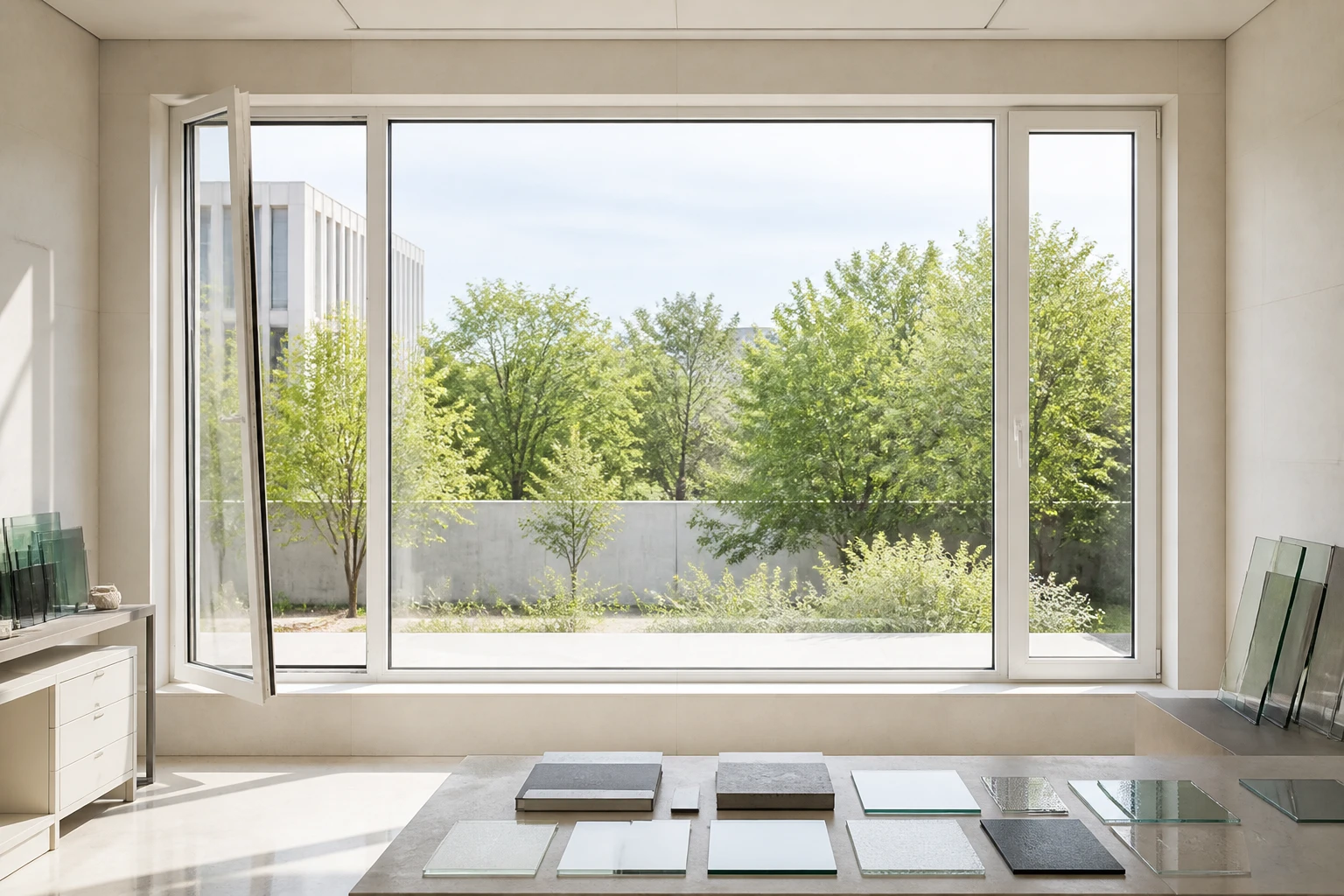
Convert a Glass Family Into an Orderable Specification
The official RGNL-100P Series Energy-Saving Window page provides a valid product baseline and several glass families. It does not publish one universal glass make-up for every opening size or project.
Use the Casement Windows product category to confirm the product family. Then issue a window-by-window glass schedule that names every pane, cavity, coating, treatment, tint and required document. This article focuses on that glass return; the existing RGNL-100P opening-mode page addresses sash operation and drawing controls.
RGNL-100P Quick Specs and Glass Controls
| Item | Published RGNL-100P data | Buyer control |
|---|---|---|
| Series | RGNL-100P thermal-break energy-saving window | Repeat the series on every window and glass mark |
| Frame basis | 6063-T5 aluminum; 100 mm width; 1.6 mm thickness | Confirm the returned section against the approved drawing |
| Glass families | Tempered, double or triple tempered, laminated, Low-E, reflective or tinted | State the selected family and full pane build-up |
| Published notation | Double glazing tempered, 5 mm + 15Ar + 5 mm | Ask the supplier to define each layer and the cavity fill in writing |
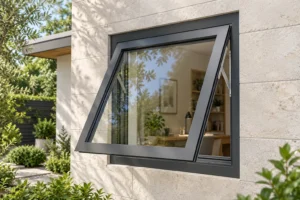
| Opening modes | Inward, tilt-and-turn, outward or awning | Coordinate glass choice with the approved sash configuration |
The source notation is preserved as published. Do not infer an unpublished standard, coating surface, gas concentration, safety marking or performance value from the notation alone.
Compare the Published Glass Options
Tempered Glass
The product page lists tempered glass. The RFQ should still state pane thickness, treatment, applicable marking and whether the requirement applies to each pane.
Double or Triple Tempered
This is published as a glass family, not a complete build-up. Require a pane-by-pane return showing cavities, spacers and treatments before approval.
Laminated Glass
Laminated glass is listed as available. Define pane thicknesses, interlayer type and thickness, location within the unit and edge-detail requirements in the schedule.
Low-E, Reflective or Tinted
These options are listed, but coating type, coating face, tint, appearance and values are not fixed by the product name. Approve a written return and physical sample when appearance matters.
Glass Selection and Approval Logic
Start with the destination requirements, window dimensions, approved opening mode and project glass schedule. Ask the supplier to return the proposed make-up without silently substituting pane thicknesses, cavities, coatings or colors.
- Assign a unique glass type to every window mark.
- Write the build-up from exterior to interior using one agreed convention.
- Identify tempered or laminated treatment for each pane.
- State the coating or tint and its required face or position.
- Request the applicable product data, reports or markings needed by the project.
- Freeze the glass return with the approved window drawing revision.
The public RGNL-100P page does not publish universal sash-size limits or project performance values. Those items require project-specific confirmation rather than extrapolation from the listed glass families.
What Changes a Glass Quote?
Quote differences can come from the selected glass family, complete pane build-up, laminated interlayer, coating or tint, pane dimensions, quantity, sample requirement, inspection scope, packing and delivery basis. A quote described only as “double glass” cannot be compared reliably with a fully defined 5 mm + 15Ar + 5 mm return.
Keep the same window schedule revision, glass notation convention and commercial scope across offers. Ask each return to identify exclusions, proposed alternatives and any item still awaiting technical confirmation.
RFQ Inputs for a Comparable Glass Return
- Project location and destination requirements
- Window marks, dimensions and quantities
- Exterior-to-interior glass build-up
- Tempered or laminated treatment per pane
- Interlayer type and thickness when applicable
- Coating or tint, position and sample reference
- Opening mode and approved sash drawing
- Required data sheets, reports and markings
- Inspection and substitution approval process
- Packing, destination and delivery basis
Send the window and glass schedules to Rogenilan for a product-specific return.
Frequently Asked Questions
What glass options are published for RGNL-100P?
The official product page lists tempered, double or triple tempered, laminated, Low-E, reflective and tinted glass families.
What double-glazing notation is listed?
The page publishes 5 mm + 15Ar + 5 mm. Buyers should ask the supplier to define each layer and the cavity fill in writing rather than infer missing details.
Does the published glass list set one configuration for every window?
No. Select and approve the final make-up for each window mark, opening mode and project requirement.
How should Low-E or tinted glass be requested?
State the glass build-up, coating or tint, position, appearance reference and any required documents. Use an approved sample where visual consistency matters.
What information is needed for a comparable quote?
Provide window sizes, quantities, opening modes, complete glass make-ups, treatments, coatings or tints, required documents, packing, destination and delivery basis.
Submit the RGNL-100P Glass Schedule
Share window marks, sizes, opening modes, full glass make-ups, coating or tint references, documents and delivery scope. Rogenilan can return the proposed RGNL-100P glass configuration against one controlled RFQ.