RGNL Aluminum Lift-and-Slide Door China Supplier Glass Options
The official product table lists tempered, double- or triple-tempered, laminated, Low-E, reflective and tinted glass families, plus the source notation 5 mm + 15Ar + 5 mm. A project buyer should select one complete build-up and obtain a marked glass return before comparing quotations or releasing production.
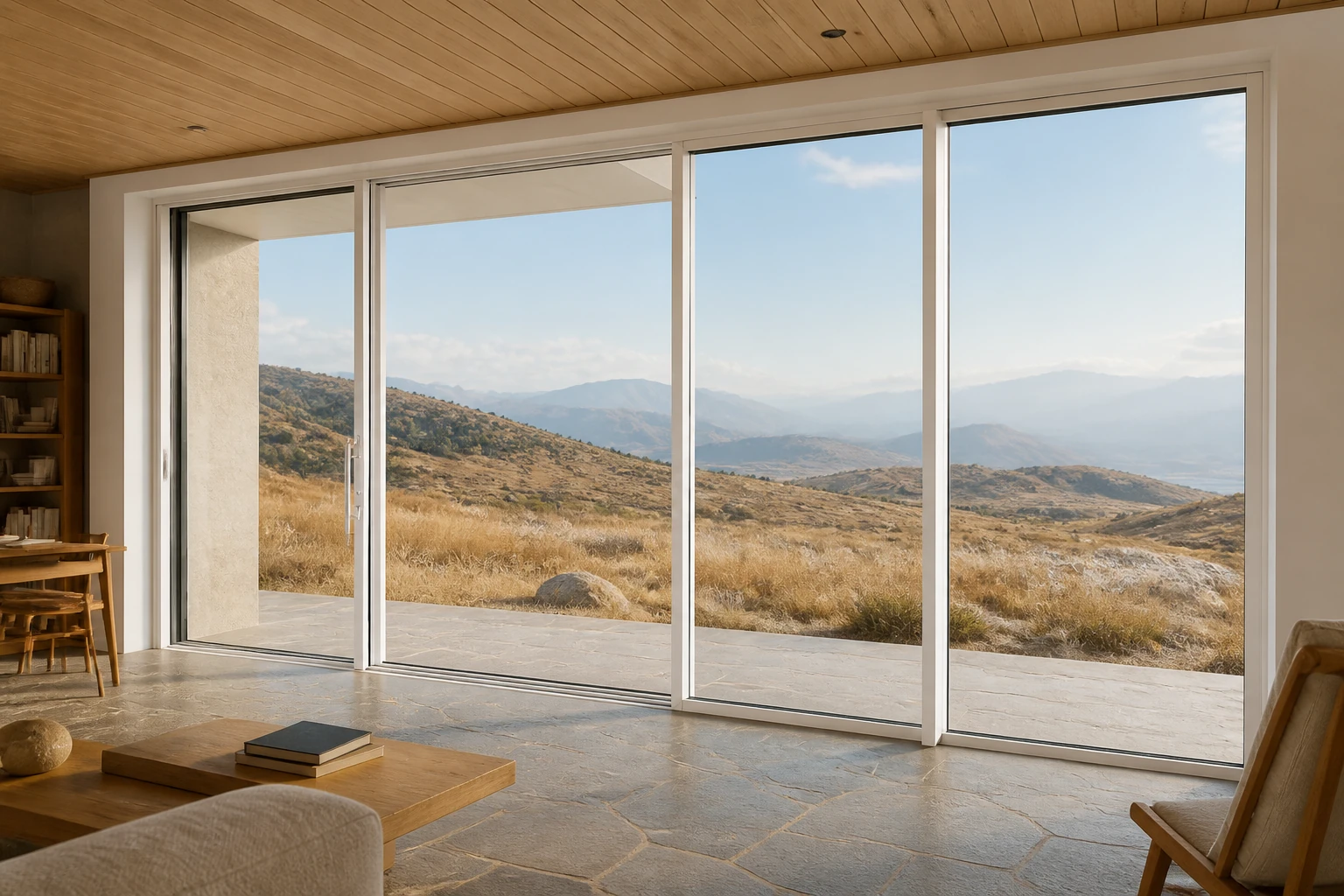
Define the Glass Build-Up Before Comparing Quotations
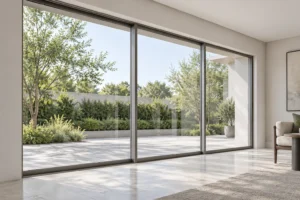
The official RGNL-Aluminum Lift And Slide Doors page provides a public product baseline, and the Sliding Doors product category confirms its product taxonomy. The source identifies an aluminum thermal-break heavy-duty lift-and-slide door with two-track and three-rail layouts.
Its glass list is a menu, not one universal specification. The RFQ should state the exact pane sequence, thicknesses, heat treatment, interlayer, coating, tint, cavity details, spacer, edge treatment and required evidence. The supplier should return that complete description against every door mark.
RGNL Lift-and-Slide Door Quick Specs
| Item | Published product information | Buyer control |
|---|---|---|
| Series | Aluminum thermal-break heavy-duty lift-and-slide doors | Repeat the exact product and drawing revision in the quotation |
| Track width | Two-track 139 mm; three-rail 208 mm | Show track count, panel travel and viewing side on the schedule |
| Profile | 6063-T5 thermal-break aluminum profile | Confirm the returned head, jamb and threshold sections |
| Aluminum thickness | 2.0 mm | Ask which quoted sections the published value applies to |
| Glass families | Tempered; double or triple tempered; laminated; Low-E; reflective; tinted | Select one complete build-up for each door type |
| Published glazing notation | Double glazing tempered, 5 mm + 15Ar + 5 mm | Request written definitions for the cavity, spacer, gas and coatings |
| Panel layouts | Two tracks with two or four panels; three tracks with three or four panels | Match glass weight and hardware to the approved panel map |
| Surface routes | Powder coating, anodized, wooden grain and PVDF coating | Approve one finish reference separately from the glass schedule |
The source notation is preserved. No cavity fill, coating surface, performance value, certification, maximum panel size or glass weight limit is inferred.
Compare the Published Glass Families
Tempered Glass
Tempered glass is listed, including double- and triple-tempered families. The return should identify every pane, heat treatment and required marking rather than use “tempered” as the whole schedule.
Laminated Glass
Laminated glass is listed as an available family. State pane thicknesses, interlayer type and thickness, placement in the assembly and any required edge or safety details.
Low-E, Reflective or Tinted Glass
These choices are named on the official page. Require coating or tint identification, coated surface, visual sample and compatibility with the complete insulated assembly.
Published Double-Glazing Notation
The table prints 5 mm + 15Ar + 5 mm. Keep that source notation in the enquiry, then ask Rogenilan to define the cavity, gas, spacer, coating and seal details in writing.
Glass Selection and Approval Logic
- Fix the door marks, total opening, panel map and active-panel direction.
- State project location, exposure and required code or performance criteria.
- Select one complete glass build-up for each door type.
- Request proposed glass weight and compatibility with the returned lifting system.
- Approve appearance using the required clear, coated, reflective or tinted sample.
- Match every cited report to the proposed size, frame, glass and opening configuration.
- Carry the approved glass code into production, inspection and packing records.
The public product copy includes performance marketing without complete report scope. This article does not publish those values. Project requirements should be supported by applicable primary documents for the quoted assembly.
Glass Price and Quotation Factors
Price can change with pane count and thickness, heat treatment, laminated interlayer, Low-E or reflective coating, tint, cavity and spacer specification, panel area, processing, samples, inspection and protective packing. Track layout, panel count, hardware compatibility, finish, quantity and delivery scope also affect the complete door quotation.
Compare totals only after the supplier marks inclusions, exclusions and alternatives against one RFQ revision. A lower rate for an undefined “double glass” option is not comparable with a door-marked build-up and approval package.
What to Send for a Glass Quotation
- Project location and door schedule
- Structural openings and frame sizes
- Two-track or three-rail panel map
- Interior view and travel direction
- Complete pane and cavity build-up
- Safety treatment and marking needs
- Coating, tint and visual sample
- Performance criteria and evidence list
- Glass-to-hardware compatibility return
- Inspection and substitution controls
- Protection, packing and crate marks
- Destination and delivery basis
Send the door schedule and glass brief to Rogenilan for a product-specific return.
RGNL Lift-and-Slide Door Glass FAQ
Which glass families are published for this lift-and-slide door?
The official table lists tempered, double- or triple-tempered, laminated, Low-E, reflective and tinted glass families. The order still needs one complete selected build-up.
What double-glazing notation appears on the product page?
The source prints 5 mm + 15Ar + 5 mm. Ask the supplier to define the cavity, gas, spacer, coating and seal details instead of interpreting the notation independently.
Can the same glass be used for every panel layout?
Do not assume so. Panel dimensions, glass weight, track layout and the returned lifting system must be reviewed together for the quoted configuration.
Does the product page prove a specific thermal or acoustic result?
Not for every proposed order. Request primary evidence that matches the actual frame, size, panel layout, glass, hardware and installation condition.
What makes two glass quotations comparable?
Use the same door marks, panel map, pane sequence, cavity details, coatings, tint, heat treatment, evidence, samples, packing and delivery basis, with all deviations identified.
Submit the Lift-and-Slide Glass Schedule
Share door marks, openings, panel layouts, selected glass build-up, coatings or tint, required evidence, samples, inspection, packing and destination. Rogenilan can return one proposed glass and door configuration against the controlled RFQ.