When procurement managers evaluate sliding windows suppliers in China, the biggest challenge isn’t finding a factory — it’s distinguishing between manufacturers who deliver certified quality and those who cut corners. We’ve helped over 200 overseas buyers source sliding windows from verified Chinese factories. Here’s the complete decision framework.
What Overseas Buyers Need to Know About Sliding Windows
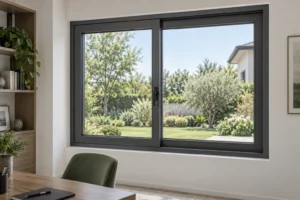
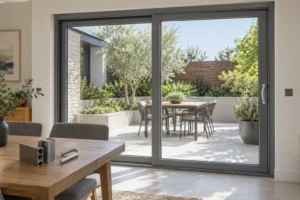
Sliding Windows (also known as horizontal sliding windows) feature sashes that glide horizontally along a track. This space-saving design makes them ideal for areas where outward-opening windows are impractical.
Critical Specifications That Separate Good from Great
Aluminum Profile Specifications
Thermal break aluminum 6063-T5/T6, 1.4-2.0mm wall thickness, multi-chamber design for insulation, PA66 GF25 thermal break strips, RAL color powder coating or anodized finish
Glass Configuration Matrix
| Glass Type | Structure | U-Value | STC Rating | Ideal Use Case |
|---|---|---|---|---|
| Double Glazed | 5+12A+5 | 1.8-2.8 W/m²K | 32-35 | Standard residential |
| Triple Glazed | 5+9A+5+9A+5 | 0.6-1.2 W/m²K | 35-38 | Passive house, cold climate |
| Low-E Coated | 5+12A+5 Low-E | 1.1-1.6 W/m²K | 32-35 | Hot climate, UV protection |
| Laminated Safety | 6.38 PVB | 2.8-3.2 W/m²K | 35-38 | Noise reduction, security |
| Triple Laminated | 6.38+16A+6.38 | 0.8-1.4 W/m²K | 42-45 | Airport, highway zones |
Hardware Selection Guidelines
Premium sliding rollers (Nylon or Stainless Steel), multi-point locks, anti-lift blocks, weather stripping (EPDM), optional security bars and screens
Procurement Checklist — 8 Things to Verify Before Ordering
- [ ] Aluminum alloy certificate — Must specify 6063-T5 or 6063-T6 grade with mill test report
- [ ] Thermal break strip origin — PA66 GF25 (not cheap PVC alternatives)
- [ ] Hardware brand & model — Specify ROTO, SIEGENIA, or equivalent; get model numbers in writing
- [ ] Glass certification — CCC mark (China), CE mark (Europe), SGCC (US) as applicable
- [ ] Performance test reports — Water tightness (≥250Pa), air permeability (≤1.5 m³/m·h), wind pressure (≥3,000Pa)
- [ ] Surface finish warranty — Powder coating ≥10 years, anodizing ≥15 years, PVDF ≥20 years
- [ ] Packaging standard — Corner protectors, EPE foam wrapping, plywood crate for sea freight
- [ ] After-sales terms — Written warranty, spare parts availability, response time commitment
Roller System Deep-Dive — The Heart of Sliding Windows
| Roller Type | Load Capacity | Lifespan | Best For |
|---|---|---|---|
| Nylon Rollers | Up to 80kg/sash | 10-15 years | Residential, light use |
| Stainless Steel Rollers | Up to 150kg/sash | 20+ years | Large panels, heavy glazing |
| Ball-Bearing Rollers | Up to 200kg/sash | 25+ years | Commercial, high-frequency |
Critical insight: In coastal environments, nylon rollers degrade 3x faster due to salt exposure. Always specify stainless steel for marine applications.
Climate Configuration Matrix
- Hot climates: Double glazing + Low-E + external shading
- Cold climates: Triple glazing + warm edge spacers + thermal break ≥24mm
- Coastal: Marine-grade stainless hardware + PVDF or anodized finish
- High-wind: 2.0mm+ profiles, multi-point locks, wind pressure tested ≥5,000Pa
Real-World Application Scenarios
Real-World Application Scenarios for Sliding Windows
Sliding Windows are the go-to choice for projects where space efficiency and unobstructed views matter most:
Balcony & Terrace Enclosures: The horizontal sliding operation requires zero exterior clearance — ideal for high-rise balconies where outward-opening windows pose safety risks. Multi-panel configurations (3-4 panels) provide up to 66% ventilation area.
Coastal Residential Developments: In marine environments, stainless steel roller systems and PVDF-coated frames resist salt corrosion. Sliding windows with laminated Low-E glass handle both the aesthetic demands of oceanfront living and the structural demands of coastal wind loads.
Urban Infill Projects: Tight lot lines and close neighbor proximity make outward-opening windows impractical. Sliding windows maximize ventilation without encroaching on adjacent property lines or walkways.
Commercial Office Buildings: Large-format sliding windows (up to 3,000mm per panel) provide expansive views and natural daylight, reducing artificial lighting costs. Multi-point locking systems meet commercial security requirements.
Maintenance & Long-Term Care
Maintenance & Long-Term Care for Sliding Windows
Roller System Maintenance: Clean the bottom track quarterly to remove debris that accelerates roller wear. Apply silicone spray to rollers annually — avoid grease-based lubricants that attract dust. For coastal installations, rinse tracks with fresh water monthly to prevent salt buildup.
Track Alignment Check: Over time, heavy sashes can cause track settling. If the window becomes difficult to slide, check track levelness and roller height adjustment. Most roller systems offer ±3mm vertical adjustment without removing the sash.
Weather Seal Replacement: EPDM seals on sliding windows experience friction wear at the interlock area. Inspect annually and replace when compression set exceeds 30% — typically every 12-15 years.
Market Trends & Industry Insights
Global Market Trends
Sliding Windows represent the largest segment of the aluminum window market by volume, accounting for approximately 35% of global aluminum window sales. Key trends include:
- Lift-and-slide adoption growing 15% annually in premium residential, driven by effortless operation of heavy triple-glazed panels
- Thermal break requirement expanding — regions that previously accepted non-thermal aluminum (Southeast Asia, Middle East) are adopting thermal break standards as energy codes tighten
- Integrated screen systems becoming standard in North America and Australia, with retractable and pleated screen options gaining popularity
Factory Price Breakdown — Where Your Money Goes
sliding windows pricing from Chinese factories depends on these components:
- Aluminum profile (35-45% of cost): Wall thickness, thermal break inclusion, alloy grade
- Glass unit (20-30%): Single/double/triple, Low-E coating, tempering, laminating
- Hardware system (15-25%): Brand tier, number of locking points, special features
- Surface treatment (5-10%): Standard powder coat vs. PVDF vs. wood grain transfer
- Labor & overhead (5-10%): Factory efficiency, order size
Budget range: $80-$250/sqm FOB China, depending on specifications above.
Pro tip: Getting 3 quotes with identical specs is the fastest way to spot inflated pricing. We can provide a spec sheet template to ensure apples-to-apples comparison.
Common Procurement Mistakes (and How to Avoid Them)
- Mistake 1: Comparing prices without matching specifications — always request detailed BOM (Bill of Materials)
- Mistake 2: Ignoring shipping costs — factor in container loading efficiency and sea freight rates
- Mistake 3: No written quality standards — attach your specification sheet to the purchase contract
- Mistake 4: Paying 100% upfront — use 30/70 T/T split with trade assurance or L/C
- Mistake 5: Skipping pre-shipment inspection — hire a third-party inspector for orders over $10,000
International Standards Compliance Guide
When importing sliding windows from China, understanding the applicable international standards ensures your products meet local building code requirements:
European Standards (EN): EN 14351-1 covers windows and doors for general use, including performance characteristics like watertightness, air permeability, and wind resistance. CE marking is mandatory for products sold in the EU.
Australian Standards (AS): AS2047 specifies requirements for windows and glazed doors, including deflection limits, water penetration resistance, and air infiltration testing. AS1288 covers glass installation in buildings.
North American Standards: ASTM E283 (air infiltration), ASTM E331 (water penetration), ASTM E330 (structural performance), and NFRC 100 (thermal performance) are the key test methods. Products may also need to meet local building code requirements such as Florida Building Code for hurricane zones.
Chinese Standards (GB): GB/T 8478 covers aluminum windows and doors, GB/T 5237 covers aluminum alloy profiles, and GB/T 11944 covers insulated glass units. Reputable factories test to these standards as a baseline.
What Our Clients Say
> “As a trade-only window supplier, I need reliable factory partners who deliver consistent quality. Rogenilan has been my primary source for aluminium tilt & turn windows for 2 years.”
Oliver Bennett — Window Dealer, Bespoke Windows & Doors, Manchester
> As a trade-only window supplier, I need reliable factory partners who deliver consistent quality. Rogenilan has been my primary source for aluminium tilt & turn windows for 2 years. The triple-seal EPDM gasket system gives us U-values that easily meet Part L building regulations. Their pricing allows me to compete with UK fabricators while maintaining healthy margins.
— Verified buyer testimonial, Uk market
Frequently Asked Questions
Q: What documents should a reliable sliding windows supplier provide?
A: Material certificates (aluminum alloy, glass, thermal strips), hardware specification sheet, performance test reports (water/air/wind), packing list, commercial invoice, certificate of origin, warranty documents, installation manual, and shop drawings. If any of these are missing, ask why.
Q: How do I verify a Chinese sliding windows factory is legitimate?
A: Check their business license scope (must include manufacturing, not just trading), visit in person or via video call, request photos of their CNC machines and testing lab, verify certifications on issuing authority websites, and ask for references from buyers in your country.
Q: What’s the typical lead time for sliding windows from China?
A: Standard configurations: 15-20 working days after shop drawing approval. Custom sizes or special finishes: 25-35 working days. We recommend adding 7-10 days buffer for sea freight booking and customs clearance.
Q: Can I order samples before placing a bulk order?
A: Yes — we recommend ordering corner samples or a full-size sample unit before committing to a large order. Sample cost is typically refundable against your first production order. Samples ship within 7-10 days and give you the opportunity to verify build quality, finish, and hardware operation firsthand.
Q: What’s the practical difference between 2-panel and 3-panel sliding windows?
A: 2-panel = one fixed + one operable (50% ventilation). 3-panel = two operable panels sliding past each other or center-operable with two fixed (66% ventilation). The choice depends on ventilation needs and wall space.
Q: Can sliding windows handle cyclone-force winds?
A: With proper engineering — yes. Use 2.0mm+ profiles, reinforced interlocks, and systems tested to AS1170.2 or local equivalent (typically 4,000-5,000Pa for cyclone zones). We provide structural calculations for your project.
Why Rogenilan for your next project? 10+ years exporting sliding windows to 60+ countries, with certified quality and competitive factory-direct pricing.
🔗 Learn about our manufacturing capability
🔗 See completed international projects
🔗 Download our product catalog
Article Tags: #SlidingWindows #AluminumWindows #BuildingMaterials #ChinaFactory #ConstructionProcurement #slidingwindowsSupplier
© 2026 Rogenilan — Professional Aluminum Windows & Doors Manufacturer | www.rogenilan.com